
"washed Arabica"
9000 article(s) found

Honey-treated coffee beans sun-washed Arabica coffee beans characteristics of grinding scale production area
Honey-treated coffee beans sun-washed Arabica coffee beans grinding scale production areas introduce the coffee fruits picked from the coffee field, must not be mistaken, must be sent to the treatment plant on the same day, to the place underdeveloped. Immature. Ripe fruit retains ripe red fruit. The most simple and effective method is to pour all the fruit into a large trough. Ripe fruit and half-green and half-red fruit are heavier.

They are all Arabica, so why are some coffee beans so expensive?
Professional barista communication, please pay attention to coffee workshop (Weixin Official Accounts cafe_style) For those who often buy coffee beans, they should be able to realize that there is a wide range of price differences between coffee from different producing areas. But, obviously, it is Arabica species, why can the price difference be more than 1,000 yuan? There are only two variables that affect the price of coffee beans: quantity of production: scarcity of goods.

Congo coffee variety is Arabica Congo Muungano cooperative washed coffee flavor introduction
Congo MUUNGANO Cooperative Country: Democratic Republic of Congo Farm: Smallholder Altitude: 1480-2000 M Variety: Bourbon Method of preparation: Washed craft flavor, raisins, sour grapefruit, light citrus and light clove aromas reminiscent of roasted spices that will plump your palate. Warm, rich and complex. Story Muungano Cooperative is located at the base

Six elements in the selection of raw coffee beans Arabica special coffee spelling with water washing treatment
Boutique coffee (specialty coffee) is also called specialty coffee selection coffee. It refers to coffee made from a small number of raw beans with excellent taste grown in an ideal geographical environment. Depending on the special soil and climatic conditions in which they grow, they have outstanding flavor. After strict selection and classification, this kind of coffee is hard in texture, rich in taste and stylish.
Is Arabica coffee beans suitable for cold extraction of Italian concentrated espresso American lattes?
Following Cafe (official Wechat account vdailycom) found that for many people, a cup of coffee in the morning is a good start to the day for a beautiful cafe to open its own shop. In order to refresh, but also to save time, simple and thick Espresso (Italian concentrate) is the best choice. "Section

Description of the Flavor of Ethiopian Cochel Coffee Sun washing
Ethiopia-this is the oldest birthplace of coffee, the cradle of Arabica, the Great Rift Valley of East Africa runs through the north, although it is located in the tropics, but at a higher altitude and cooler climate than African countries, the Cafa primeval forest (Kaffa Forest) in southwestern Ethiopia is still the gene pool of Arabica (Arabica). The coffee taste spectrum produced by Ethiopia has a great amplitude, almost containing

Development of Joy Manor in Nicaragua Coffee Manor in the country where washed Arabica beans are produced
In Nicaragua, the coffee industry provides 200000 of the country's jobs, and coffee beans are the country's most economically valuable crop, accounting for 20% of the country's total exports. The low price of coffee season has hit all the countries that produce washed Arabica beans, but the pain seems to be even more magnified in Nepal, where many diversified coffee-producing countries, such as Costa Rica, have suffered from the coffee industry.
Introduction to the hometown of Arabica Coffee and Ethiopia Coffee
Following caf é (Wechat official account vdailycom) found that Beautiful Caf é opened a small shop of its own Ethiopia is the hometown of Arabica coffee, it is in the forests of the Kaffa region that you can see wild Arabica coffee. In Ethiopian, coffee is called Bun or Buna, and coffee beans (coffeebean) may be turned from Kaffa Bun

Katim coffee beans taste, wash, sun flavor description, grinding scale introduction
Katim coffee beans taste wash sun flavor description grinding scale variety introduction 1. Ethiopia Africa Ethiopia is the birthplace of coffee, and there are more changes and choices than any other producing area. Imagine that there are more than 1000 varieties of coffee in Ethiopia. Because of this, professional coffee makers are likely to be surprised when they go to Ethiopia to choose beans, because in the new coffee
The characteristics of Arabica beans Rwanda coffee beans
Rwanda quality coffee comes from washed Arabica beans, which has a unique and perfect flavor. Rwanda coffee is absolutely high quality in the form of washed Arabica beans. As far as Africa is concerned, its coffee industry attracts attention because the country thrives mainly by producing the best possible coffee beans. The taste of Rwandan coffee is described as "grass aroma"
Arabica coffee bean variety iron pickup coffee bourbon coffee Rosa coffee which tastes better
Professional coffee knowledge exchange more coffee bean information please follow the origin of coffee in coffee workshop (Wechat official account cafe_style) Coffee: Africa is currently recognized as the birthplace of coffee the world's first coffee tree was found in the KAFFA province of Ethiopia in Africa. Local indigenous tribes often grind the fruit of coffee and knead it with animal fat to make Xu.

Which country in Africa has the best coffee? how to drink the coffee brought back by Africa?
Professional coffee knowledge exchange more coffee bean information please follow the coffee workshop (Wechat official account cafe_style) Ethiopia global market share: 5% treatment: washing and tanning season: October-December output (2012): 8 million bags main varieties: Arabica, Ethiopia original varieties global production ranking: Ethiopia, the world's fifth largest coffee producer

Fine coffee Rwanda coffee raw bean rules Rwanda coffee bean producing area
High-quality coffee comes from washed Arabica beans, which has a unique and perfect flavor. Rwanda coffee is absolutely high quality in the form of washed Arabica beans. As far as Africa is concerned, its coffee industry attracts attention because the country thrives mainly by producing the best possible coffee beans. The taste of Rwandan coffee is described as "grass aroma", with

Ethiopian Arabica coffee with rich body Original growing environment Fine coffee
The highest grades of washed Ethiopian coffee Yirgacheffe G1 G2 Sidamo are Grade 2 and Grade 3 (G2, G3), and the coffee processed in the sun in eastern Ethiopia is mostly Grade 4 or Grade 5 (G4, G5). In many cases, fourth-grade coffee is labeled as five-grade in order to reduce taxes. Now the classification is not very uniform, some chaos, because there are sun processing

Guatemalan coffee grading, Guatemalan coffee culture
Following Kaiping (official Wechat account vdailycom) found that Beautiful Cafe opened a small shop of its own. Coffee is the second largest commodity in the world after oil in trade. Arabica accounts for about 70% of the world's coffee production, and about 10% of these 70% Arabica receive fine coffee called Specialty Coffee boutique coffee.

Washed Arabica Coffee Bean Flavor Description Grind Scale Variety Region Introduction
Shakisso/Shakiso is located in the Guji region of Sidama, south of the Oromia region, next to Sidama and Gedeo. There are many mines in this area, which were used for gold mining in the early days, so there are many potholes in this coffee-growing area. this makes people

Introduction of Jintamani Manor Arabica Coffee Manor in Bali, Indonesia
Generally, it is a natural hybrid variety of iron pickup, and it is generally washed. In the northernmost part of Sumatra, lake tawar Tawahu or Axie aceh or Takengon Kengang are planted by another Gaga friend in the traditional shade method, and mainly washed or semi-washed, with a bright sour flavor and a light dull fragrance. American boutique coffee industry mostly uses this area coffee.

Coffee processed by sun and water washing, and processed by different processing methods.
Ethiopia is the hometown of Arabica coffee, and it is in the forests of Kaffa that you can see wild Arabica coffee. In Ethiopian, coffee is called Bun or Buna, and coffee beans (coffeebean) may be translated from Kaffa Bun. Arabica coffee was discovered early in the Harald area, most likely
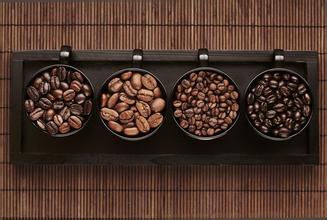
Sidamo coffee beans wash Sidamo boutique coffee beans Ethiopian plateau and other places
Ethiopia is the hometown of Arabica coffee, and it is in the forests of Kaffa that you can see wild Arabica coffee. In Ethiopian, coffee is called Bun or Buna, and coffee beans (coffeebean) may be translated from Kaffa Bun. Arabica coffee was discovered early in the Harar area and is likely to come.

Arabica bean treatment method raw bean treatment semi-washing drying method Peruvian water washing treatment
The semi-washing method first removes the skin with water, and then goes to the sun. This is a relatively new and rare method. This method is only suitable for specific areas of some countries, with a long drying period. The coffee produced by this method is sticky, and the mucus is not removed as it is fermented in the tank. Therefore, the coffee produced by this semi-washing method contains water washing method.